Showing posts with label health issues. Show all posts

Friday, October 9, 2020

Podcast preparation

  • This is how I filled out the questionnaire the host of the podcast sent yesterday afternoon:  

1. Tell me a little bit about yourself, so that I can introduce you on the podcast. (Ex: where you have lived, worked, passions, awards, family, creative endeavors or personal interests important things to you). This is a little bio of sorts. Please write in the third person and keep it to five sentences or less. 

Wendi grew up in Palmyra, New York; Orem, Utah; Tallahassee, Florida; and Longmont, Colorado. She has been married to John for a quarter of a century. They are the parents of two adult children and grandparents to a very loved baby grandson. She enjoys walking and talking with friends and family, taking pictures in nature, and spending time with her grandson. 


2. What is an interesting little known fact about you?

My Tetris skills help me with closet and drawer organization. :) 


3. Please share with me some of the “hard times” you have experienced and would like to share on the podcast. 

* I have struggled with clinical depression for most of my life. My actual diagnosis is Bipolar 2 Disorder, which is heavy on depression interspersed with periods of elevated mood called hypomania. Along with that, I have struggled with social anxiety, which made it very difficult to leave my house for several years. I also have overlapping challenges with generalized anxiety, perfectionism, and some obsessive compulsive tendencies. 

* I was diagnosed with Multiple Sclerosis in January 2013. My right side has different levels of loss of feeling and discomfort from my ribs to my toes. My “uniform” has become heavy skinny jeans and very supportive sneakers. When I wear that combination, I have less discomfort and can walk without limping. 

* My husband and adult children no longer believe in the same way I do and no longer participate with me in organized religion. However, they continue to be some of the best people I know. This unexpected circumstance has caused some ongoing dissonance and loneliness in my life since August 2012. 

* Our children both had some medical conditions, which ended up triggering long-term emotional distress for me. Our son was in the NICU for the first 10 days of his life. Our daughter suffered from epilepsy during her growing up years, which required me to stay in the hospital with her for almost two weeks on two different occasions. 


4. What were the top 3-5 lessons you learned during your "hard times?” (You can list more than 5 if you want). 

* Comparing my life, accomplishments, or progress with others often causes discouragement and self-doubt. 

* We each have different strengths and weaknesses that give us the ability to influence, contribute, serve, love, empathize, and connect with people in unique and important ways. 

* Perfectionism isn’t the same thing as perfection. It causes unnecessary suffering in the form of stress, shame, and guilt while trying to achieve the impossible. 

* Walking in the fresh air and sunshine can help almost any problem seem a little more manageable. The act of moving your body and choosing to put one foot in front of the other is an effective way to change the direction of your thoughts—and eventually your life. 

* Focusing on “small or something,” instead of “all or nothing” is helpful when feeling immobilized by anxiety, depression, or perfectionism. Breaking large problems into smaller ones or choosing to just “do the next right thing” is a powerful way to cope with feeling overwhelmed. 

* Mental illness is not a character flaw and when we talk about it more with others, we can lessen the stigma surrounding it, along with understanding that it affects many more people than we realize. 


5. How have you changed or what have you done differently because of your challenges? 

* I gradually learned to face my fear of leaving the house by walking to nearby destinations each day—to shop for a few items or run small errands. 

* After that, I continued learning to overcome my social anxiety by going out of my way to visit over 500 women. In the process, I was able to help several who also suffered with depression and anxiety. I also found some dear friends who have been an uplifting and supportive influence in my life. 

* Those activities built enough confidence in myself to return to college and earn an associate degree at Utah Valley University when my daughter started attending there after high school graduation. I was never able to take more than 6-9 credits each semester, but I rarely missed class and learned to turn in homework assignments early (unlike the first time as a young adult when I was often immobilized by anxiety and depression). 

* It also gave me the courage to move to a new home that we built to better fit my needs for MS. We lived in a four-level-split for over 18 years, but it became too difficult for me to climb stairs several time each day. So we built a home across town with main-level living and room to accommodate possible future wheelchair needs. Because of that, we have a place for our daughter and grandson to live in our basement. 

* I am still trying to learn how to self-comfort, instead of self-criticize. Showing compassion for others in their difficult circumstances is much easier for me than extending that same compassion to myself. 

6. Do you have a favorite Bible verse that you would like to share that became meaningful to you during your difficulty? 

* Philippians 4:13 ~ “I can do all things through Christ which strengtheneth me.” 

 (That verse has helped me develop self-confidence and the strength to overcome anxiety and discouragement.) 

* Proverbs 3:5-6 ~ “Trust in the Lord with all thine heart; and lean not unto thine own understanding. In all thy ways acknowledge him, and he shall direct thy paths.” 

 (Those verses have helped me better cope with difficult circumstances that have been confusing and overwhelming in life.) 

7. Are there websites, books, music or other resources you would recommend to someone in a similar circumstance? 

The music and especially lyrics of Hilary Weeks (an inspirational, Christian singer) has become a type of soundtrack to my journey. In addition to her many CDs, she now has an inexpensive subscription program called “Live All In” where she releases a new song with additional material each month. More than anything else, her music helps interrupt the downward spiral of my thoughts and begins to replace them with more uplifting thoughts. 


8. Do you want to be able to have people contact you after the show? (Ex: on a website or on Facebook if they really connect with you and your story). If yes, please share your contact information. 

If people wanted to contact me, my writing blog is “Wend Your Way.” I’m not currently posting on it, but it includes many of Hilary Weeks’ lyrics, along with experiences and lessons I’ve learned during my journey. People could leave a comment with their contact information there.

*** 

After listening to 2.5 episodes of her podcast last night and this morning, I decided to post several updates—so there will be more than just half-finished book chapters on this blog. It has been very soothing to the anticipatory anxiety I was starting to feel about the upcoming interview, which will be on Wednesday morning. 
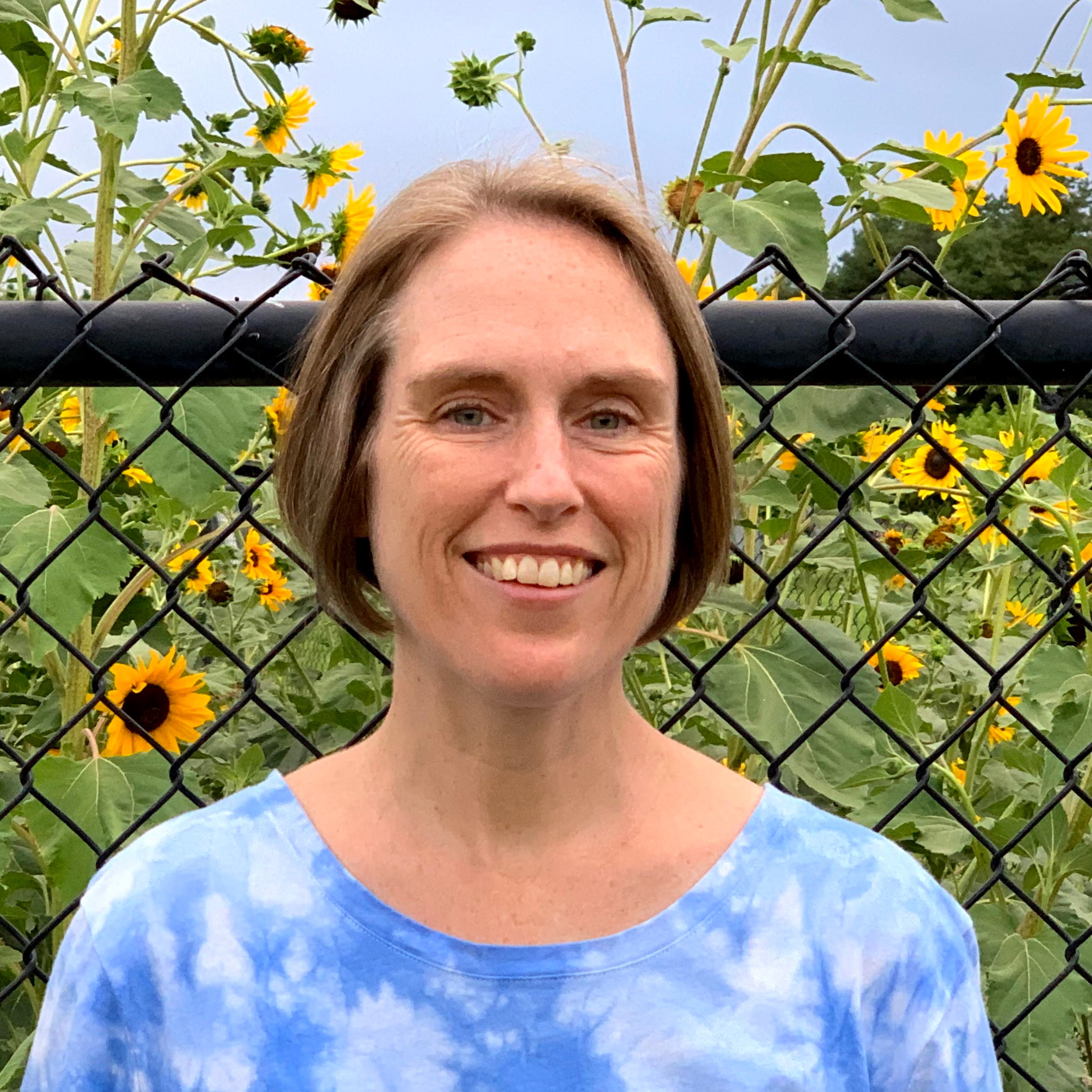
This is the "head shot" I sent
(my husband took it down by the Ashton's house on one of our walks a few months ago)

This is the picture I wish I could have sent.
It was taken of me and our grandson at the beginning of August. 

Thursday, August 6, 2020

Possible Title of Book

I'm still not feeling well, so I rested all day yesterday and didn't write anything. However, my husband suggested that I title the book "Walking with Wendi" afterall. So here is a possible combination of the two titles (actually, a title and subtitle) ~

 Walking with Wendi: 

Practice Makes Perfect Progress

 and Other Perspective Shifts of a Recovering Perfectionist

I also emailed 120 friends and relatives about the progress on the book. I hope it will provide more momentum for me to continue writing, rather than putting too much pressure on myself. We shall see... 

Wednesday, July 22, 2020

Chapter 12: Dealing with Disappointment

* I wrote these experiences down without much proof-reading. I will revisit this post tomorrow. (I made a few corrections and added a quote in the middle on July 23, 2020.)

            Most healthy marriages have some good times and some bad times, some happiness and some heartache, some adventure and some disappointment. I will always be grateful to my husband, John, for choosing me to be his wife in the first place and for continuing to see the good in me 25 years later. He has been consistently patient, loving, kind, and empathetic through all my years of struggle with mental illness and other health challenges. I will be forever grateful that I made the decision to marry him also. I have tried to be as patient and loving toward him as he has been with me, but I still have a long way to go and I learn a lot from him as we continue our life together.
            I will briefly share our story again with a few extra details. We met in 1993, while serving as full-time missionaries for The Church of Jesus Christ of Latter-day Saints in the Pennsylvania Philadelphia Mission. We discovered that our parents live about five blocks away from each other in Orem, but we never met each other prior to my first area in the mission field. We served in some of the same areas and knew many of the same missionaries and members, but we never actually served near each other during our missions. He was the assistant to the mission president during the final two months of our mission in 1994 and discreetly arranged to have our seats assigned next to each other on the flight back to Utah, since we went home on the same transfer. We even have pictures where we are hugging our individual families in the background of each other’s pictures at the airport. We started dating soon after returning home and ended up getting married in the Bountiful Utah Temple almost exactly a year later in 1995.
            John was very busy working full-time and attending school full-time at Utah Valley State College for the first three years of our marriage. I stopped working a few months after we were married because I had “all day” sickness during my pregnancy with our daughter. She was born nine months and six days after our wedding in 1996. Our son arrived a little less than three years later in 1999. Those were busy years for us and, occasionally, I noticed that John and I weren’t praying, reading the scriptures, or attending the temple together very often. I rationalized that it was just because he was so busy and I assumed he was praying and studying on his own, just like I had been. However, there were nagging doubts about that through the years that followed. My depression and anxiety became much more serious after our son was born and dealing with those complicated circumstances consumed most of our extra attention during the years between 1999 and 2010. During that time, I retreated to our bedroom much more often and John began to shoulder more of the household responsibilities. He also chose to start another company so that he could work from home and be more involved with raising the children.
            By fall 2010, I had completely withdrawn from life. My social anxiety had become so distressing that I rarely left the house and I didn’t even attend church, although I wished I could. John tried hard to be a loving and understanding father and husband through all of this and always took the children to church because he knew it would ease my feelings of guilt. During 2011 and 2012, we decided to change the type of anti-depressant I was taking one more time and then, later, increased the dosage as well. That change helped me to redevelop the habits of attending church and the temple, reading the scriptures, and contributing more to the care of our home and family.
            Unfortunately, in March 2012, my right hip, leg, and foot became inexplicably numb and tingly, so I had several MRIs and other procedures to figure out what was causing it. In addition, John finally told me in August 2012 that he didn’t believe in God or anything related to Him in our religion. He continued to attend church with the family, but it caused me a great deal of distress. However, I felt like he had been loyal to me during my difficult years of depression, so I was going to stay loyal to him with this new situation in our marriage. In January 2013, I was officially diagnosed with Multiple Sclerosis after it was confirmed with a spinal tap. That was disappointing and unsettling news, but we were grateful to finally know what we were dealing with. John was very supportive and helped me with some of my Copaxone injections at home for the three years following my diagnosis.
            Those two life-changing events could have sent me spiraling back into my deep depression. However, I worked hard to be diligent with walking and continuing the other habits I had practiced in the previous two years. They became my anchor as I slowly grew more devastated about John’s unbelief in everything I held most sacred. Then, in September 2013, I had a strong impression that I needed to know more people in my ward (church congregation) and neighborhood. So I gradually started visiting women close to our home and then, as I gained more confidence, I gradually visited women in other congregations and neighborhoods also. I have now visited approximately 500 women and it has changed my life forever. I visited women on all parts of the faith spectrum, was able to help several other women who were suffering from depression, and developed some very close friendships. Through that process, I was gradually able to stop mourning about John’s change in beliefs and developed even more respect for the good person he still is. 
            Dieter F. Uchtdorf spoke in the April 2015 General Conference and his words resonated with me. “Being grateful in our circumstances is an act of faith in God. It requires that we trust God and hope for things we may not see but which are true…. True gratitude is an expression of hope and testimony. It comes from acknowledging that we do not always understand the trials of life but trusting that one day we will. In any circumstance, our sense of gratitude is nourished by the many and sacred truths we do know: that our Father has given His children the great plan of happiness; that through the Atonement of His Son, Jesus Christ, we can live forever with our loved ones; that in the end, we will have glorious, perfect, and immortal bodies, unburdened by sickness or disability; and that our tears of sadness and loss will be replaced with an abundance of happiness and joy, ‘good measure, pressed down, and shaken together, and running over.’… How blessed we are if we recognize God’s handiwork in the marvelous tapestry of life. Gratitude to our Father in Heaven broadens our perception and clears our vision. It inspires humility and fosters empathy toward our fellowmen and all of God’s creation.” (“Gratitude in Any Circumstances,” Ensign, May 2015).
            In fall 2015, I decided to go back to college when our daughter started attending UVU after her high school graduation. Then, in fall 2016, we decided to build a home with main-level living across town, since my MS symptoms were making it difficult for me to climb the stairs several times each day in our current home, which had a four-level-split floor plan. Making all those construction decisions, combined with the financial stress of having a mortgage again, brought more tension back into our marriage. Things improved once we moved into our new home in March 2017, but we started to grow apart again later that year. My schooling, combined with a few visits I still tried to make each week, kept me a little too busy. John has always been a very hard worker and sometimes his work schedule kept him extremely busy as well. I made the decision to withdraw from school in fall 2017, so that I could try to start writing this book. We also decided that marriage therapy was something we would finally be willing to try, since nothing else seemed to be working. Neither of us wanted to separate, but the silence and distance growing between us often made life feel very lonely for each of us, even though we were both still in the marriage.
            After ten therapy visits, we were feeling much closer. We started walking together while holding hands and occasionally went on other dates as well. Meanwhile, I was working on gathering information for my personal history, since writing this book quickly became a daunting task. That gradually turned into family history, which gradually increased my time in the temple exponentially. I also decided to go back to UVU in summer 2018 to finish my associate degree in behavioral science. In addition, I decided to attend a few classes at the UVU institute of religion to earn my diploma for that as well. The combination of all those activities gradually caused distance to creep in again. This time, there were more conflicted feelings surfacing within me because I was more invested in religious learning and worship than I had ever been before.
            Both of our adult children stopped believing in a similar way as their dad and that had been particularly difficult for me through the previous five years. Around the same time in 2018, our daughter started dating someone more seriously. Her dad allowed them to sleep together in her bedroom, but that was extremely difficult for me. I felt that he hadn’t given me a choice when he stopped believing, since he had already decided by the time he told me. I also didn’t feel like I was given a say in the matter with our daughter and her boyfriend. I understood that he was trying to do what was best for everyone involved, but it just triggered a lot of my previous conflicted feelings. That was a very low point in our marriage.
            In 2019, our daughter and her boyfriend told us on mother’s day that she was pregnant. I tried to be supportive, but knew we needed some more marriage therapy. This time, I asked John to choose the therapist and he decided on one who specialized in betrayal trauma. He hadn’t purposely betrayed me and I knew that, but on some level it still felt like a betrayal. Our daughter’s pregnancy added an additional dimension to that complicated swirl of emotion.
            I graduated with an associate degree in November 2019 and continued to immerse myself in family history and temple work. I felt a lot of peace when I was in the temple and I needed that with everything that was happening with our daughter. We continued marriage therapy and our daughter gave birth to a healthy baby boy in January 2020. She had an unforeseen c-section, which caused her to not be able to return immediately to college like she had planned. So we have spent the past seven months together with her sweet baby and it has been such a healing time. The pandemic ended up closing the temples and churches, which brought my full focus back home. Our marriage gradually began to heal again.  
            As I look back, our patterns have been very cyclical and I shoulder my share of the blame. I’m grateful that I have gradually become less rigid in general and have finally realized that I can’t micro-manage or manipulate John with my faith (even though that wasn’t my conscious intention). I’ve learned that we are each only in charge of ourselves and we can only improve or change in the ways that we are currently able to. We also share a great desire to make a positive difference in the lives of people around us and that is very fulfilling. So I now focus on that, instead of our differences in religious belief.  Life will always still be a mix of happiness and disappointment, but we have made it 25 years and that is a huge accomplishment. I’m planning for at least 25 more. 

Sunday, July 19, 2020

Chapter 15: Compensatory Blessings

* I spent most of today adding content to two previous posts. My brain hurts, so I'm going to post these quotes now and revisit them at a later time. (I added two more quotes and several paragraphs of content on July 22, 2020.)


           Looking back on the past several years, I can see clearly that the Lord has arranged at least three unofficial missions for my life. The “visiting” mission began in September 2013 and lasted until August 2015. (I returned to college at that point, but still continued visiting on more of a part-time basis.) The “family history and temple work” mission began in February 2018 and ended in March 2020 with the COVID-19 pandemic. (I have continued to work on some family history, but far less than I had previously.) The “grandma” mission began in January 2020 with the birth of our first grandson and I imagine that will continue to be my focus for many years, to one degree or another. I discuss each mission in more detail throughout the book. The point I want to make here is that they have definitely been compensatory blessings for me in several ways.

            First, because I struggled so deeply with anxiety and depression for most of my official proselyting mission from 1993-1994, I had many regrets about not being able to serve more fully. I carried those regrets with me off and on for twenty years. When I started visiting, I was able to use all the skills I learned on my original mission – approaching people before and after meetings at church, knocking on doors, calling people, making appointments, and being flexible when people cancelled or needed to reschedule. I floundered a lot and the visits weren’t always optimal, but I wouldn’t have been able to do any of it had I not served my original full-time mission. So, it renewed my confidence and helped me feel like I made restitution for any missed opportunities or wasted time (even though that wasn’t necessary). In addition, unless the Lord dramatically changes things, I don't think I will be able to serve a mission with my husband in our retired years, as I thought we might. These unofficial missions have given me the opportunity to serve in different ways as a more mature adult. 

             Richard G. Scott explained, “The Lord is intent on your personal growth and development. That progress is accelerated when you willingly allow Him to lead you through every growth experience you encounter, whether initially it be to your individual liking or not. When you trust in the Lord, when you are willing to let your heart and your mind be centered in His will, when you ask to be led by the Spirit to do His will, you are assured of the greatest happiness along the way and the most fulfilling attainment from this mortal experience. If you question everything you are asked to do, or dig in your heels at every unpleasant challenge, you make it harder for the Lord to bless you.” He then gave this valuable counsel, “Find the compensatory blessings in your life when, in the wisdom of the Lord, He deprives you of something you very much want. To the sightless or hearing impaired, He sharpens the other senses. To the ill, He gives patience, understanding, and increased appreciation for others' kindness.... You will discover compensatory blessings when you willingly accept the will of the Lord and exercise faith in Him” (“Finding Joy in Life,” Ensign, May 1996, pp. 24-26). 

            Second, I very much wanted to be completely healed from depression, anxiety, and Multiple Sclerosis. Even more than those healing blessings, I begged and pleaded for the Lord to give my husband (and then my children) the faith and spiritual experiences they hoped and prayed for, but could never experience on their own. I haven't receive those blessings yet. However, I wouldn’t have felt the need to begin visiting if my heart weren’t already broken and humbled over that combined set of circumstances. Then, through my visiting journey, the Lord gradually healed my broken heart and helped build greater confidence within me. He also strengthened my capacity to serve and follow promptings in ways I didn’t think were possible before. In addition, I learned how to cope in more long-term and fulfilling ways with my anxiety and depression. Perhaps, the most unexpected compensatory blessing of all were the treasured friends he helped me find along the way.

            David A. Bednar spoke about the blessings of paying a full tithe. I believe these compensatory blessings can be applied to life in general, as well. He explained, "Some of the diverse blessings we obtain as we are obedient… are significant but subtle. Such blessings can be discerned only if we are both spiritually attentive and observant (see 1 Corinthians 2:14)…. Spiritual illumination and perspective are poured out through the windows of heaven and into our lives…. Sometimes we may ask God for success, and He gives us physical and mental stamina. We might plead for prosperity, and we receive enlarged perspective and increased patience, or we petition for growth and are blessed with the gift of grace. He may bestow upon us conviction and confidence as we strive to achieve worthy goals. And when we plead for relief from physical, mental, and spiritual difficulties, He may increase our resolve and resilience” (“Windows of Heaven,” Ensign, November 2013).

            Third, temple and family history work became a huge compensatory blessing for me. One of the last lines of my patriarchal blessing says, “As you help to gather genealogy, you … will be a great blessing to those who have passed on beyond the veil. When you leave this earth there will be a great reunion with your ancestors who will be glad to receive you because of your work in their behalf.” I used to think that was absolutely impossible for me. Yet, the Lord helped me to have more success than I ever imagined possible. As I spent those hours, days, weeks, months, and years immersed in that sacred work, I became much more settled and at peace about my family and their different beliefs on this side of the veil. As I listened to those words over and over again during the temple ordinances, my love only grew for my family here and my ancestors who have already finished their life on earth. That love and peace were unexpected and very welcome blessings.

            Sheri Dew discussed compensatory blessings in the context of the COVID-19 pandemic. “Then, as I sat in the last endowment session I’ll likely attend for a while, I felt a familiar sensation gnawing at me. It took just seconds to identify what it was. Mourning. I was starting to mourn the fact that life as I’ve known it — weekly time in the temple, sacrament and other meetings that allow me to renew my covenants and enjoy the camaraderie of my ward family — is changing, at least for a period of time…. Nothing happening in the world today is catching the Lord off-guard. Satan hasn’t pulled a fast one on Him. Circumstances that led to the inception and spreading of the coronavirus were all foreseen by Him who sees all. That is clear, because our leaders have been getting us ready for this very hour…. The fruits of revelation are often more easily seen in hindsight. It is no surprise to those who believe in prophets that more than a year ago…  prophets, seers and revelators, introduced a home-centered, Church-supported curriculum and admonished us to be more intentional about studying and teaching the gospel in our homes. It is no surprise that two years ago they introduced ministering and asked us to learn to care for each other in a higher, holier way.... During this unusual season when the way we worship and serve the Lord has been modified, let’s make sure we see the ways the Lord is blessing us. Let’s be sure we identify the compensatory blessings and power He has for those who seek them…. In a time of darkness, the ministering power of the Light of the World will be even easier to see. How beautiful it will be if, as a global Church family, we don’t just endure this particular challenge but we seek the hand of the Lord in our lives and then share our witness of His mercy, power and peace” (“How have you seen ‘compensatory blessings’ during the coronavirus outbreak?,” Church News, 15 March 2020). 

            Fourth, our grandson was born just two months before the temples and chapels closed their doors. Because he and his parents live in our basement, we’ve been able to spend every day of his life with him. Social distancing during the pandemic would have made that very unlikely if they didn’t live with us. When our daughter first announced her pregnancy, I never dreamed that her little baby would be the biggest compensatory blessing of all during this time. An unexpected blessing occurred after his delivery also. Our daughter endured a 50-hour labor and he still needed to be delivered by c-section. Because of that, our daughter wasn’t able to immediately return to her college classes as she had planned. So we ended up being able to spend eight magical months together, loving this sweet little angel that was sent to our home. In addition, we have considered me high risk because MS and its treatment both compromise the immune system. I have literally only been inside buildings (other than our home) eight times during the three initial months of the pandemic. I drove places on my own only three times during those months and wasn’t able to walk with friends very often because they were home with their families as well. This unexpected time with our grandson and daughter has been priceless and so appreciated.

            Neil L. Andersen emphasized, “As evil increases in the world, there is a compensatory spiritual power for the righteous. As the world slides from its spiritual moorings, the Lord prepares the way for those who seek Him, offering them greater assurance, greater confirmation, and greater confidence in the spiritual direction they are traveling. The gift of the Holy Ghost becomes a brighter light in the emerging twilight…. there is a compensatory power, an additional spiritual endowment, a revelatory gift for the righteous” (“A Compensatory SpiritualPower for the Righteous,” BYU Speeches, 18 August 2015).

            I testify that this is true. These “missions” didn’t seem possible to me when I was prompted to embark on them. However, I have been given obvious guidance and assurances all along the way. I will be forever grateful for the gift of personal revelation that has blessed me during every step of this journey.

Thursday, July 16, 2020

Part 2: Overcoming Obstacles


            In this section, I will describe some of the obstacles I’ve faced in my life and ways that I’ve learned to overcome them in varying degrees. I will give an overview of my journey here and then will discuss some more specific lessons I’ve learned in the following chapters.
             I have struggled with depression for over half my life. I started showing more serious signs of it in high school (around 1987). It became much worse when I served a proselyting mission in Pennsylvania and Maryland (1993-1994), but I was miraculously able to stay in the mission field for the entire 18 months. I literally prayed my way through those extremely difficult times and the Savior’s atonement carried me. I wasn’t aware at the time that my future husband was serving as a missionary in the same mission. We didn’t know each other before our missions, we only crossed paths briefly a couple of times in the mission field, but we flew home on the same airplane. Our parents lived a few blocks away from each other (and still do), so that made it easy for us to get to know each other and date after our missions.  
            Because of his encouragement, I sought medical attention for my emotional struggles and was diagnosed with mild bipolar disorder, but my challenge is mostly with depression and social anxiety. I improved over the following months with a combination of therapy and mood stabilizing medication. We were married in the Bountiful Utah Temple a year after returning from the mission field (1995) and I decided to stop taking the medication so we could start our family. We were grateful to welcome our daughter 9 months and 6 days later (1996) and our son was born just under three years after her (1999). I tried to keep my life very simple during those years, but our son ended up in the newborn intensive care unit for the first ten days of his life and that was the opposite of simple.
            My emotional health declined quickly and we decided it was time to resume therapy and medication. However, the combination of medicine that worked so well before no longer worked. We spent the next decade trying different types, dosages, and combinations of medication without long-term success. When I was in the worst stage of my depression (from about 2008 to 2010), I spent most of my time in bed, not wanting to leave our bedroom and especially not wanting to leave the house. I couldn’t remember anything positive. I felt like everything I said or did or thought was wrong. In fact, I couldn’t even carry on much of a conversation. It felt like there was no way out. 
            I really wanted to attend church, the temple, and other church activities, but every time I even thought about going, I felt extremely anxious and cried almost uncontrollably. When I didn’t end up going, I felt really guilty and that guilt would make my depression worse. It was a very miserable and hopeless cycle. However, when I did actually make it to church, I almost always felt guilty from something that was said in a talk or lesson and then I often cried uncontrollably at church too. I then ended up spending most of my time hiding in the bathroom because I couldn’t compose myself enough to go back to the meeting. When I returned home after meetings, I second guessed every little thing I said or did –  or didn’t say or do. That made it even harder to go the next time. It was a very dark and lonely time for me. 
            At one extremely low point in fall 2010, I realized I wasn’t doing anything to help anyone in my life, including myself. If I had actually been suicidal, I would have tried to end my life. But, since I wasn’t, I decided I needed to learn to live. I was inspired to start walking to destinations all over town as an excuse to leave the house without having to interact with too many people. I bought small amounts of groceries, picked up prescriptions, picked up and dropped off books at the library, mailed letters and bill payments at a mail box in the business park near our home, returned hangers to the dry cleaners, and donated small items to Savers. As I walked in the sunshine and fresh air, the endorphins started working again, and I gradually found purpose in living.
            I had two very large obstacles to face in the next two years. In August 2012, my husband of seventeen years unexpectedly talked to me about a drastic change in his spiritual beliefs, which we previously had in common. I didn’t understand how that could be, since he had worked so hard on his mission and served faithfully in many callings. However, I tried to support him in his decision, even though it took years to gradually begin to understand his perspective. Then, in January 2013, I was officially diagnosed with Multiple Sclerosis, after experiencing symptoms off and on since 2001. I gave myself daily injections at home for 3 ½ years, received monthly infusions at the oncology lab for the next two years, and am now continuing to receive infusions twice each year. I have limited feeling in my lower right side, but can still function well overall. Since then, both of our children have chosen to not share my spiritual beliefs either.
            Several times, I’ve had the choice of giving up and going back to bed or continuing to face my challenges. I have allowed myself time to mourn in each case, since the future has increasingly become less certain. However, I have made the deliberate decision again and again to continue believing, progressing, and trying my best.

Friday, July 10, 2020

Chapter 1: The Messy Middle

* After several revisions in September 2019, this is the final draft of chapter one:
        I’m the oldest of five children, so I was expected to set a good example for my younger siblings and was frequently assigned the role of babysitter. Because my parents often served in church leadership positions, I also felt some pressure to be a good example for others who may be observing our family. I completed the Personal Progress program during my teenage years and earned the Young Womanhood Recognition award before graduating from high school. I graduated from seminary after attending four years of early morning classes before school and was regularly the class scripture chase champion. When I turned 21, I decided to serve a full-time proselyting mission and accepted a call to serve for eighteen months in the Pennsylvania Philadelphia Mission speaking English. I tried to serve faithfully during each of those months. A year after returning home, I married a returned missionary in the temple. We were blessed early in our marriage with a daughter and then a son. These could be considered as a set of culturally traditional events, as if a blueprint was followed for a successful, religion-centered life.
            My dad worked for the Church Education System during my first twenty years. Children of parents in the military sometimes refer to themselves as “military brats” because of the frequency of moving from place to place. In a similar way, I have referred to myself as a “C.E.S. brat” because we moved several times during my youth. I was born in Utah, we moved to upstate New York when I was two, back to Utah the summer before first grade, to northern Florida the summer before fifth grade, and to Colorado the summer before my senior year in high school. My dad was then hired to teach in the religion department at Brigham Young University for twenty more years, so our family made one last move back to Utah.
            On paper, it appears that I did all the “right” things while being raised in a religion-centered home. The automatic assumption may be that this combination would lead to a happy and successful life. There has been some happiness and a measure of success. However, being a human on this planet usually ends up feeling messy to one degree or another and life doesn’t always turn out like the original blueprint.
            While the previous description of my life is true, I have experienced different degrees of depression and anxiety during most of it, beginning in my youth. Because of that, my full-time mission experience was extremely difficult. My husband is one of the best people I know with a good and kind heart, but he no longer attends church with me or believes in the way I originally thought he did. Our children have both had significant health issues, one as a newborn baby and the other during an extended period in their youth. Both children are now adults and they try to be good and kind as well, but they also chose to stop attending church during their teenage years and no longer believe in the way we originally taught them. They have each experienced some depression and anxiety as well and have made some lifestyle choices that are sometimes difficult for me to understand. In addition to the emotional struggles I’ve experienced and the challenges our family has faced, I have also experienced some physical challenges and was diagnosed with Multiple Sclerosis in January 2013.
            The original title of this chapter was “Shiblon Meets the Messy Middle”. You may understand a little more of what I mean by the messy middle. But what about Shiblon? Who is he and why am I including him in this first chapter? We read about Shiblon in The Book of Mormon: Another Testament of Jesus Christ. Most of what we know about him is found in Alma 38. In this chapter, we learn that Shiblon is the middle son and his father, Alma, is speaking with him. Verse 2 reads, “And now, my son, I trust that I shall have great joy in you, because of your steadiness and your faithfulness unto God; for as you have commenced in your youth to look to the Lord your God, even so I hope that you will continue in keeping his commandments; for blessed is he that endureth to the end.”
            The reason I appreciate Shiblon is that he is steady, even though his life isn’t easy. His older brother, Helaman, becomes a prophet and a successful military leader. Helaman’s story is told in many of the later chapters of Alma. His younger brother, Corianton, made moral mistakes as a missionary and Alma spends several chapters explaining the gospel to strengthen him. Not as much is written about Shiblon and that makes me want to pay closer attention to it.
            In verses 3 and 4, we learn that Shiblon had difficult experiences on his mission. The end of verse 4 reads, “and thou didst bear all these things with patience because the Lord was with thee; and now thou knowest that the Lord did deliver thee.” In verse 5, Alma gives him (and us) some important counsel: “…I would that ye should remember, that as much as ye shall put your trust in God even so much ye shall be delivered out of your trials, and your troubles, and your afflictions, and ye shall be lifted up at the last day.”
            In verse 9, Alma powerfully concludes a brief summary of his conversion story by saying, “…I have told you this that ye may learn wisdom, that ye may learn of me that there is no other way or means whereby man can be saved, only in and through Christ. Behold, he is the life and the light of the world. Behold, he is the word of truth and righteousness.” In verse 10, Alma counsels Shiblon to “…be diligent and temperate in all things.” In verse 11, he continues: “See that ye are not lifted up into pride; yea, see that ye do not boast in your own wisdom, nor of your much strength.” In verse 12, Alma leaves him with this counsel: “Use boldness, but not overbearance; and also see that ye bridle your passions, that ye may be filled with love; see that ye refrain from idleness.”
            I love these words of advice to this middle, sometimes overlooked, son. Be steady and faithful in enduring to the end throughout your life. Remember to trust the Lord and He will deliver and protect you from the trials, troubles, and afflictions--which will inevitably come to all of us. Look to God and to salvation through Christ, which will come because of their righteousness (see 2 Nephi 2:3). We can’t save ourselves, but we can do our best to be diligent, obedient, humble, and temperate in the process.
            While teaching a Relief Society lesson to the women in our church congregation, I shared a quote from President Benson, which sheds light on Alma 38:10. “[A temperate person] is restrained in his emotions and verbal expressions. He does things in moderation and is not given to overindulgence. In a word, he has self-control. He is the master of his emotions, not the other way around” (Teachings of Presidents of the Church: Ezra Taft Benson, 302). That explanation was powerful for me and helped me understand why I appreciate Shiblon’s steadiness so much. The longer I live, the more I realize that if I am out of balance in any aspect of my life (spiritually, emotionally, socially, or physically), it will contribute to the current struggle. The answer is always to get centered back on Christ and to focus more fully on developing the attributes that He exemplifies.
            In another often quoted scripture from The Book of Mormon: Another Testament of Jesus Christ, Helaman 5:12 addresses this, along with the idea I originally discussed about balance: “…remember, remember that it is upon the rock of our Redeemer, who is Christ, the Son of God, that ye must build your foundation; that when the devil shall send forth his mighty winds… yea, when all his hail and his mighty storm shall beat upon you, it shall have no power over you to drag you down to the gulf of misery and endless wo, because of the rock upon which ye are built, which is a sure foundation, a foundation whereon if men build they cannot fall.” I focus a little more when a scripture is prefaced with the word “remember” twice.
                Emily Freeman, one of my favorite authors, wrote: “In our moments of greatest worry, we must turn to the Savior. He knows how to get us through the middle moments because He has experienced them Himself” (Making it Through the Middle, p. 30). Elder Neal A. Maxwell explains: “It is in our weakness and extremity that God’s power is fully felt. Only when, of ourselves, we are helpless is His help truly appreciated” (All These Things Shall Give Thee Experience, 31). Emily’s sister shared this insight with her, “Sometimes He refines us in ways we might not have wanted because He needs to use us in ways we might not have thought.” (Making it Through the Middle, 48).
            If all of that sounds overwhelming to you, here is some wise counsel from Emily, “I realized I needed to stop and take note of how far I had come, how much I had grown. I needed to recognize that the Lord was moving me toward the promise even if the progress was taking longer than I thought it should.” She discovered a passage that I also discovered back in 2001: “…They began to prosper by degrees…” (Mosiah 21:16). She continued, “We have to learn to wait on the Lord… We must also remember that sometimes the miracle doesn’t come all at once—sometimes it comes by degrees. Through this process…we become sanctified…. The miracle you seek may not be discernable from the middle of the journey” (Making it Through the Middle, 13-15). She concludes, “We come to know the Savior best in the moments when we need Him most” (Making it Through the Middle, back cover). I add my witness that we can trust in God who is working on the miracle behind the scenes, even when we don’t have any idea how our difficult experience will ever work out.  

Sunday, November 17, 2019

Introduction

I chose the title of this blog partially because my first name is Wendi. So the word "wend" is basically my name, minus the last letter. :)

I also chose this phrase because I feel that life is a journey and I would like to use this blog as a place to chronicle my progress.

Earlier in my journey, I spent much of my time walking and visiting with women throughout Utah County. At one point, I created cards with the phrase "Walking with Wendi" on them.

Here is a picture of me wearing my favorite walking shoes on the front with part of the text on the back:


They aren't business cards. They are just "what I do" cards. I handed them out to friends as a reminder of my commitment to walking and talking with women.

I have experienced depression and anxiety off and on for most of my life. I was also diagnosed with Multiple Sclerosis in January 2013. Walking has helped me deal with those health issues in a productive way over the past nine years.

I have also spent the last four years taking classes off and on at Utah Valley University. I will finish my associate degree within the next month and then I will begin the next phase of my journey.

Our daughter is having a baby and her due date is in mid-January. This will be our first grandchild and I will babysit him while his mom finishes her degree at UVU over the next couple of years.

I have been encouraged by many people over the past few years to write a book about my experiences. That feels like a daunting, almost insurmountable, task. So I thought I would practice by posting some of my writing on this blog.