Showing posts with label trials. Show all posts

Friday, October 9, 2020

Unexpected invitation and God's timing

Yesterday afternoon, I was unexpectedly invited to be a guest on the "Stories of Hope in Hard Times" podcast. The text from Tamara K. Anderson came as I was having a Zoom call with my life coach yesterday afternoon. 

  • I explained in my reply: 

We were discussing how my faith in Jesus Christ can help me learn to see myself as He does and how my value isn't connected to my productivity or my challenges. I just surfaced from a few weeks of a difficult depression, so if your text had come a day earlier, I probably wouldn't have had the courage to accept your invitation. Thank you for the opportunity to try to be helpful to your listeners. I didn't write much from a spiritual angle, but I can talk more about that if you would like me to.


  • This is how Tamara described her podcast in the follow-up email: 

"My goal is to spread hope, especially to those who are exhausted and overwhelmed right now in their trials. More than anything I want people to glean a glimmer of hope as they listen. Hopefully they will leave uplifted and with the idea that 'if they could do that, I can hang in there a bit longer in my trials.'"


  • I sent her the completed questionnaire and "head shot" yesterday evening and she responded this morning:
I am so glad you accepted. As I was praying about who I should invite to be on the podcast yesterday, I felt I was supposed to invite you…so, God is in the details. I can’t wait for next week.

  • This is the reply I just sent:
Thanks, Tamara. I believe in prayer and God's timing. I'm continuing to learn how timing is an important detail ("tender mercy") when our prayers are answered. It helps us know He is aware of us in a more intimate way

I wrote several long "thought downloads" to my life coach beginning on Saturday (before General Conference) and ending Wednesday evening. The combination of ten hours of General Conference, lots of prayer, and emptying out my brain like that are the reasons I finally pulled out of my depression. I had to put away my book on September 17th after several revisions of parts 1-3 because it was just making the situation worse. 

I had the chance to walk and talk with two dear friends on the Friday before and the Monday after General Conference. I hadn't seen either of them during the previous weeks of depression. Then my younger sister "just happened" to drive here from Colorado a day earlier than planned on Wednesday night and we walked and talked yesterday morning. 

She is my only sister and is one of my dearest friends. She understands and loves me completely, even though she knows all the less than positive things about me and my life. I read the thought download emails to her toward the end of our walk. As she was leaving, she said that she thinks I didn't have a mental block or a "nervous breakdown" over my book--she thinks there is just more of my journey that will need to be included before I can finish it. I had never thought of it that way and it gave me hope. Writing is very difficult for me and it doesn't come naturally. It helped me to not feel like I failed at something I worked so hard on after all. 

After listening to a couple of your podcast episodes, I decided to post those thought downloads on my blog today. 

Your invitation came at precisely the right time. God prepared me to be able to say yes--and gave me time to be introspective, which may help us talk about what most needs to be said for your listeners during the interview. I will continue to be prayerful between now and then.

***

One other side note: Tamara is the cousin-in-law of my good friend. My friend, her children, brother, and parents have all helped me with many temple ordinances. I am so grateful to her and them. She sent me this text on July 2nd: 

"I was just talking to my cousin's wife who does a podcast on having hope during hard times. She asked if I had anyone I thought she should interview and I sent her your number because I think you are amazing and articulate. So if you hear from Tamara Anderson it's my fault."

My friend is a BYU English professor, so that is high praise coming from someone who is as amazing and articulate as she is. 

I thought Tamara would never contact me and I hadn't thought of it since that text. So, here we are a little over three months later. 

God's timing. I'm so grateful for how he orchestrates so much behind the scenes to bless each of us. 

Podcast preparation

  • This is how I filled out the questionnaire the host of the podcast sent yesterday afternoon:  

1. Tell me a little bit about yourself, so that I can introduce you on the podcast. (Ex: where you have lived, worked, passions, awards, family, creative endeavors or personal interests important things to you). This is a little bio of sorts. Please write in the third person and keep it to five sentences or less. 

Wendi grew up in Palmyra, New York; Orem, Utah; Tallahassee, Florida; and Longmont, Colorado. She has been married to John for a quarter of a century. They are the parents of two adult children and grandparents to a very loved baby grandson. She enjoys walking and talking with friends and family, taking pictures in nature, and spending time with her grandson. 


2. What is an interesting little known fact about you?

My Tetris skills help me with closet and drawer organization. :) 


3. Please share with me some of the “hard times” you have experienced and would like to share on the podcast. 

* I have struggled with clinical depression for most of my life. My actual diagnosis is Bipolar 2 Disorder, which is heavy on depression interspersed with periods of elevated mood called hypomania. Along with that, I have struggled with social anxiety, which made it very difficult to leave my house for several years. I also have overlapping challenges with generalized anxiety, perfectionism, and some obsessive compulsive tendencies. 

* I was diagnosed with Multiple Sclerosis in January 2013. My right side has different levels of loss of feeling and discomfort from my ribs to my toes. My “uniform” has become heavy skinny jeans and very supportive sneakers. When I wear that combination, I have less discomfort and can walk without limping. 

* My husband and adult children no longer believe in the same way I do and no longer participate with me in organized religion. However, they continue to be some of the best people I know. This unexpected circumstance has caused some ongoing dissonance and loneliness in my life since August 2012. 

* Our children both had some medical conditions, which ended up triggering long-term emotional distress for me. Our son was in the NICU for the first 10 days of his life. Our daughter suffered from epilepsy during her growing up years, which required me to stay in the hospital with her for almost two weeks on two different occasions. 


4. What were the top 3-5 lessons you learned during your "hard times?” (You can list more than 5 if you want). 

* Comparing my life, accomplishments, or progress with others often causes discouragement and self-doubt. 

* We each have different strengths and weaknesses that give us the ability to influence, contribute, serve, love, empathize, and connect with people in unique and important ways. 

* Perfectionism isn’t the same thing as perfection. It causes unnecessary suffering in the form of stress, shame, and guilt while trying to achieve the impossible. 

* Walking in the fresh air and sunshine can help almost any problem seem a little more manageable. The act of moving your body and choosing to put one foot in front of the other is an effective way to change the direction of your thoughts—and eventually your life. 

* Focusing on “small or something,” instead of “all or nothing” is helpful when feeling immobilized by anxiety, depression, or perfectionism. Breaking large problems into smaller ones or choosing to just “do the next right thing” is a powerful way to cope with feeling overwhelmed. 

* Mental illness is not a character flaw and when we talk about it more with others, we can lessen the stigma surrounding it, along with understanding that it affects many more people than we realize. 


5. How have you changed or what have you done differently because of your challenges? 

* I gradually learned to face my fear of leaving the house by walking to nearby destinations each day—to shop for a few items or run small errands. 

* After that, I continued learning to overcome my social anxiety by going out of my way to visit over 500 women. In the process, I was able to help several who also suffered with depression and anxiety. I also found some dear friends who have been an uplifting and supportive influence in my life. 

* Those activities built enough confidence in myself to return to college and earn an associate degree at Utah Valley University when my daughter started attending there after high school graduation. I was never able to take more than 6-9 credits each semester, but I rarely missed class and learned to turn in homework assignments early (unlike the first time as a young adult when I was often immobilized by anxiety and depression). 

* It also gave me the courage to move to a new home that we built to better fit my needs for MS. We lived in a four-level-split for over 18 years, but it became too difficult for me to climb stairs several time each day. So we built a home across town with main-level living and room to accommodate possible future wheelchair needs. Because of that, we have a place for our daughter and grandson to live in our basement. 

* I am still trying to learn how to self-comfort, instead of self-criticize. Showing compassion for others in their difficult circumstances is much easier for me than extending that same compassion to myself. 

6. Do you have a favorite Bible verse that you would like to share that became meaningful to you during your difficulty? 

* Philippians 4:13 ~ “I can do all things through Christ which strengtheneth me.” 

 (That verse has helped me develop self-confidence and the strength to overcome anxiety and discouragement.) 

* Proverbs 3:5-6 ~ “Trust in the Lord with all thine heart; and lean not unto thine own understanding. In all thy ways acknowledge him, and he shall direct thy paths.” 

 (Those verses have helped me better cope with difficult circumstances that have been confusing and overwhelming in life.) 

7. Are there websites, books, music or other resources you would recommend to someone in a similar circumstance? 

The music and especially lyrics of Hilary Weeks (an inspirational, Christian singer) has become a type of soundtrack to my journey. In addition to her many CDs, she now has an inexpensive subscription program called “Live All In” where she releases a new song with additional material each month. More than anything else, her music helps interrupt the downward spiral of my thoughts and begins to replace them with more uplifting thoughts. 


8. Do you want to be able to have people contact you after the show? (Ex: on a website or on Facebook if they really connect with you and your story). If yes, please share your contact information. 

If people wanted to contact me, my writing blog is “Wend Your Way.” I’m not currently posting on it, but it includes many of Hilary Weeks’ lyrics, along with experiences and lessons I’ve learned during my journey. People could leave a comment with their contact information there.

*** 

After listening to 2.5 episodes of her podcast last night and this morning, I decided to post several updates—so there will be more than just half-finished book chapters on this blog. It has been very soothing to the anticipatory anxiety I was starting to feel about the upcoming interview, which will be on Wednesday morning. 

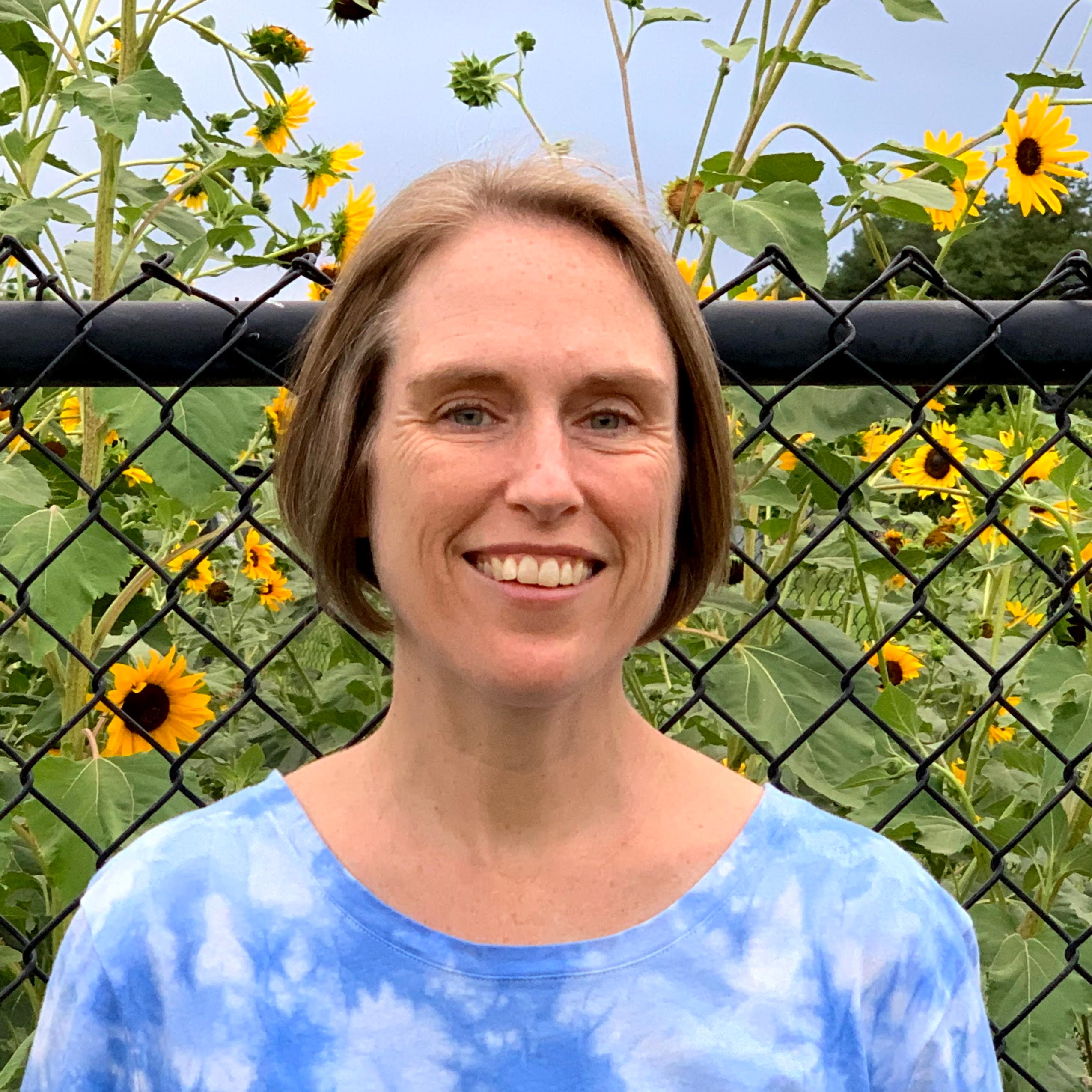
This is the "head shot" I sent
(my husband took it down by the Ashton's house on one of our walks a few months ago)

This is the picture I wish I could have sent.
It was taken of me and our grandson at the beginning of August. 

Piecing events together (third thought download to my life coach on October 7, 2020)

  • Here is what I'm piecing together as I look back on the past six months (edited for this blog): 
Back toward the beginning of our coaching, I expressed disappointment in my prayers and how I felt like I had to gear up for prayer, like it was an event. I basically stopped praying on my knees in the bathroom before going to bed and just kept praying in my mind. But then my mind started not functioning as well. I was looking more and more to coaching sources for answers because I was trying so hard to make progress with our coaching experience. That meant I spent less time on truth from God's sources—although I think coaching and the gospel can complement each other in a beautiful way. 

During that time, I also felt strongly prompted to start writing my book—and made more progress than I have ever made before. I really do believe that I was receiving magnifying and enabling help from heaven. So I spent a little over two months focusing on that project almost exclusively. I stopped watching the "Don't Miss This" videos, which was how I was studying for Come Follow Me, and didn't spend much time in the scriptures—other than searching them and Ensign articles for verses and quotes that inspired the journey I was writing about in my book. I think that's why I was so confused and eventually defeated when my husband kept telling me I couldn't quote them nearly as much as I was. 

Meanwhile, there were no ongoing temple ordinances or refuge from the storm that I found within the temple walls—which used to occur several times each week. There was no more family history (which was effectively turning my office into a temple), institute classes (twice a week for the previous year), church family, or friends strengthening me (except for a handful of walks with my friends—when it used to be 2-3 times weekly). There was just an occasional walk or talk with my ministering sister (who is on her own confusing journey after two years of crisis and turmoil surrounding a difficult situation.) It was just me in a house full of people who don't believe in ways that are supportive to my faith. No ministering brothers (except for one or two texts), no family members I could trust with my emotional or spiritual health (except for my sister and it's hard to figure out a time to talk on the phone), no priesthood blessings, no outside guidance—other than coaching, coaching podcasts, and Instagram. 

The bishop gave my husband authorization to administer the sacrament to me, but he doesn't believe, so he couldn't ever say anything spiritually uplifting. So my church was just listening to "In Humility, Our Savior" by Hilary Weeks while I got myself and our bedroom ready to be a place of sacramental worship. Sometimes, prior to that, I listened to "Broken" by Kenneth Cope (along with a few other EFY songs) while I was taking a shower before getting ready. Therefore, my last lifelines to spirituality were the music and lyrics of Kenneth Cope and Hilary Weeks—I wasn't listening much to her other music because I needed to focus while writing my book. Then I had that complication with Hilary giving permission to use the lyrics in my book after all. And my communication with Kenneth was also very unsettling, although he tried to be supportive. They don't actually know me in real life, though, so that isn't their fault. I think that communication with them ended up being the last crushing blows to the small shred of spirituality and self-confidence I had left. I used to listen to hymns by Vocal Point in my car, but I have driven my car only a handful of times in the past seven months. 

The overarching theme has been that my husband has felt more stress and pressure than he's experienced in 15 years because of the complications to his two jobs by COVID-19, while also trying to earn his master's degree online. He needed more than I could give in support and he had very little energy to give me much support in my challenges. Meanwhile, therapy and coaching were becoming more and more heavy and draining—and, suddenly, all the self-introspection brought self-hate and self-doubt rushing to the surface. Then I started watching our grandson part-time, which left me sleep deprived and emotionally unstable. 

I read these verses in 3 Nephi 18:18-20 last night and again this morning: "Ye must watch and pray always lest ye enter into temptation; for Satan desireth to have you, that he may sift you as wheat. Therefore, ye must always pray unto the Father in my name; And whatsoever ye shall ask the Father in my name, which is right, believing that ye shall receive, behold it shall be given unto you." 

One of the reasons I have avoided those verses in the past is the one that follows them in verse 21: "Pray in your families unto the Father, always in my name, that your wives and your children may be blessed." There hasn't been family prayer in our home for several years. So, I guess the final verse was causing me to feel doubt about the previous two verses. 

And I'm learning more and more that Satan is mean. He can't cause mental illness, but he will definitely exploit any weak spots a person has. I think I was kind of being "sifted like wheat" in every direction. 

I never sent my coach the first 16 chapters of my book. Those are the ones that discuss the spiritual and emotional side of my journey. I discussed the compensatory blessings I've received, even though my prayers haven't been answered about my family's unbelief in the way I have hoped. But most of those spiritual compensatory blessings gradually disappeared as the pandemic went on and my isolation became more destructive. My coach only read the social side of my journey, which is the section I was editing during the last part of these challenges. That part wasn't giving me the spiritual upliftment I needed along the way, and it also emphasized how those things were no longer a part of my life—which is why I started feeling like a hypocrite. 

That is why I was feeling so parched and empty coming into this General Conference. The first session was all tears. The second session started my recovery. The third session began giving me the answer to switch my focus from coaching sources to gospel sources. The Sunday morning session gave me my definitive answer to shift my focus fully back on Jesus. 

By the time the final session ended, I was drained emotionally because conference weekends are the most difficult weekends of the year at our house. I am in my office with the door closed for ten hours—which pushes everyone's buttons. And, it's "insult to injury" for them that it's ten hours listening to people they don't respect, preaching things they don't believe in (and they feel that preaching drives a wedge between me and them). 

Does it make sense? I take full responsibility for my errors in judgment along the way. But I also feel like my physical/emotional illnesses played a part in that—although I'm trying not to use that as an excuse. And I understand that circumstances are neutral, but I think this particular combination of circumstances was a difficult set for me to manage with the challenges I was dealing with behind the scenes. 

So, that is why I'm confused about the coaching experience at this point—especially since I spent $2K on it over the past six months. I think I was supposed to quit listening to other coaches (since they are just dispensing general coaching), but not quit working with you (since it's more personal). I also think that you're probably the only coach in the world who has the empathy and spiritual strengths that I need to help me recover from this unfortunate situation I've ended up in. I feel like I've made the proper course corrections, but I also feel unsettled about my level of self-confidence as I continue my progress on this correct path. 

I'm also anxious about focusing too much on my thoughts and feelings because it seems like that is part of the reason I gradually ended up in this situation. That is my understanding at this point, but I'm not trying to discharge blame. So I'm hoping that the combination of Jesus, my coach, and me can help me back onto solid, steady ground over the next month. 

Friday, August 14, 2020

Chapter 34 ~ Eternal Progression … The Journey Continues

I found most of the material for this chapter this morning. These quotes displaced the ones I had planned to use, so I believe they are inspired. I learned a lot as I was piecing them together.


            Eternal progression is a phrase that may seem hopeful to some and daunting to others. I fall in the hopeful camp. I believe it means we get unlimited chances to try again…and again… and again to improve upon our past and progress. This is possible because of Heavenly Father’s perfect plan, which is centered on the atonement of Jesus Christ. I wrote about a few of my ancestors in the previous chapter. I believe they listened to Russell M. Nelson on April 1, 2018, when he said, “Our message to the world is simple and sincere: we invite all of God’s children on both sides of the veil to come unto their Savior, receive the blessings of the holy temple, have enduring joy, and qualify for eternal life” (“Let Us All Press On,” Ensign, May 2018). I believe my ancestors acted on that invitation from a prophet of God because their names were forwarded to me from my sister on April 5th and my mom on April 6th. My desire is to always do my best to follow the counsel of God’s prophet as well.

            This quote by Neal A. Maxwell fills my heart with hope. “What we insistently desire, over time, is what we will eventually become and what we will receive in eternity. …’For I, the Lord, will judge all men according to their works, according to the desire of their hearts’ (D&C 137:8–9).…God thus takes into merciful account not only our desires and our performance, but also the degrees of difficulty which our varied circumstances impose upon us. No wonder we will not complain at the final judgment, especially since even the telestial kingdom’s glory ‘surpasses all understanding’ (D&C 76:89) (“According to the Desire of [Our] Hearts,” Ensign, November 1996).

            In February 2019, my good friend and ministering sister shared a comforting and reassuring quote with me about eternal progression. She read it in a chapter with the title “The Saving Christ” written by Terry and Fiona Givens. “Elder James E. Talmage wrote in the first edition of the Church-published Articles of Faith, ‘advancement from grade to grade within any kingdom, and from kingdom to kingdom, will be provided for … Eternity is progressive.’ He later elaborated, no man will be detained in the lower regions ‘longer than is necessary to bring him to a fitness for something better. When he reaches that stage the… doors will open and there will be rejoicing among the hosts who welcome him to a better state.’ Slightly later, President Joseph F. Smith taught that ‘there is a time after this mortal life, and there is a way provided by which we may fulfil the measure of our creation and destiny, and accomplish the whole great work that we have been sent to do, although it may reach far into the future before we fully accomplish it. Jesus had not finished his work when his body was slain, neither did he finish it after his resurrection from the dead, although he had accomplished the purpose for which he then came to earth, he had not fulfilled all his work. And when will he? Not until he has redeemed and saved every son and daughter of our father Adam that has or ever will be born upon the earth to the end of time…’” (The Christ Who Heals,” p.119).

            In one of my favorite talks on faith, Neil L. Andersen explained, “Faith is a principle of power, important not only in this life but also in our progression beyond the veil. By the grace of Christ, we will one day be saved through faith on His name.” (“Faith is Not by Chance, but By Choice,” Ensign, May 2015).

            In Summer 2019, an Institute teacher reminded me about an instructive quote by Henry B. Eyring, which continues to help me redirect my thoughts from worrying about the future. “Building faith in Jesus Christ is the beginning of reversing spiritual decline in your family and in your home. That faith is more likely to bring repentance than your preaching against each symptom of spiritual decline. You will best lead by example. Family members and others must see you growing in your own faith in Jesus Christ and in His gospel…. You will find some of your greatest joys in your efforts to make your home a place of faith in the Lord Jesus Christ and a place that is permeated with love, the pure love of Christ. … Some have tried with full heart for that blessing, yet it has not been granted. My promise to you is one that a member of the Quorum of the Twelve Apostles once made to me. I had said to him that because of choices some in our extended family had made, I doubted that we could be together in the world to come. He said, as well as I can remember, ‘You are worrying about the wrong problem. You just live worthy of the celestial kingdom, and the family arrangements will be more wonderful than you can imagine.’ I believe that he would extend that happy hope to any of us in mortality who have done all we can to qualify ourselves and our family members for eternal life. I know that Heavenly Father’s plan is a plan of happiness. I testify that His plan makes it possible for each of us who has done the best we can to be sealed in a family forever. I know that the priesthood keys restored to Joseph Smith were passed on in an unbroken line to President Russell M. Nelson. Those keys make possible the sealing of families today. I know that Heavenly Father loves us, His spirit children, with a perfect love” (“A Home Where the Spirit of the Lord Dwells,” Ensign, May 2019).

            Larry R. Lawrence explained, “The Spirit can show us our weaknesses, but He is also able to show us our strengths. Sometimes we need to ask what we are doing right so that the Lord can lift and encourage us. When we read our patriarchal blessings, we are reminded that our Heavenly Father knows our divine potential. He rejoices every time we take a step forward. To Him, our direction is ever more important than our speed” (“What Lack I Yet,” Ensign, Nov. 2015).

            Henry B. Eyring explained, “…You can find the word remember throughout the scriptures…. My message is an invitation…  to remember. Here are three suggestions about what you could remember each week when you partake of the sacred emblems of the sacrament. I hope they are helpful to you, as they have been to me. First, remember the Savior. Remember who He was while on earth, how He spoke to others, and how He showed kindness in His acts. Remember whom He spent time with and what He taught. The Savior “went about doing good” (Acts 10:38)…. Most of all, we can remember the great price He paid, out of His love for us, to remove the stain of our sins. As we remember Him, our desire to follow Him will grow. We will want to be a little kinder, more forgiving, and more willing to seek the will of God and do it.

…It’s hard to think of the Savior—His purity and perfection—without also thinking of how flawed and imperfect we are in comparison. We have made covenants to obey His commandments, yet we frequently fall short of this high standard. But the Savior knew this would happen, which is why He gave us the ordinance of the sacrament.” (“Always Remember Him,” Ensign, Feb. 2018),

            He continued with counsel that has been very helpful for me over the past couple of years. “As you examine your life during the ordinance of the sacrament, I hope your thoughts center not only on things you have done wrong but also on things you have done right—moments when you have felt that Heavenly Father and the Savior were pleased with you. You may even take a moment during the sacrament to ask God to help you see these things. If you do, I promise you will feel something. You will feel hope. When I have done this, the Spirit has reassured me that while I’m still far from perfect, I’m better today than I was yesterday. And this gives me confidence that, because of the Savior, I can be even better tomorrow….No matter how well you keep your promise to always remember Him, He always remembers you. The Savior knows your challenges. He knows what it is like to have the cares of life press upon you. He knows how urgently you need the blessing that comes from always remembering Him and obeying Him—“that [you] may always have his Spirit to be with [you]” (D&C 20:77; emphasis added). So He welcomes you back to the sacrament table each week, once again offering you the chance to witness before Him that you will always remember Him.” (“Always Remember Him,” Ensign, Feb. 2018),

            Neal A. Maxwell explained, “For the faithful, our finest hours are sometimes during or just following our darkest hours.…With an understanding of God’s plan of salvation, we know that the rejoicing, the striving, the suffering, the tutoring, and the enduring experiences of life all play their part in an intelligible process of helping us, if we will, to become, as the Savior beckoningly invited, ‘even as I am.’ (3 Ne. 27:27)…The plan always points the way, but does not always smooth the way, since individual development requires an ‘opposition in all things.’ (2 Ne. 2:11.) The Lord will give us the needed intellectual and spiritual confirmation concerning His plan, but on His terms and in His own way.…Unsurprisingly, therefore, this mortal school produces some soaring triumphs but also a history filled with individual mistakes. But we should not blame the school, nor the curriculum! Least of all, the Schoolmaster! (“The Great Plan of the Eternal God,” Ensign, May 1984).

            In another talk, Neal A. Maxwell continued, “God delights in blessing us, especially when we realize ‘joy in that which [we] have desired’ (D&C 7:8).…It is up to us. God will facilitate, but He will not force.…Even a spark of desire can begin change. The prodigal son, sunk in despair, nevertheless desired and ‘came to himself,’ determining that ‘I will arise and go to my father’ (Luke 15:17–18).…Fortunately for us, our loving Lord will work with us, ‘even if [we] can [do] no more than desire to believe,’ providing we will ‘let this desire work in [us]’ (Alma 32:27)….Only by educating and training our desires can they become our allies instead of our enemies!…It is up to us. Therein lies life’s greatest and most persistent challenge. Thus when people are described as ‘having lost their desire for sin,’ it is they, and they only, who deliberately decided to lose those wrong desires by being willing to ‘give away all [their] sins’ in order to know God (Alma 22:18). a loving God will work with us, but the initiating particle of desire which ignites the spark of resolve must be our own! It all takes time. Said the Prophet Joseph: “The nearer man approaches perfection, the clearer are his views, and the greater his enjoyments, till he has overcome the evils of his life and lost every desire for sin; and like the ancients, arrives at that point of faith where he is wrapped in the power and glory of his Maker and is caught up to dwell with Him. But we consider that this is a station to which no man ever arrived in a moment” (Teachings of the Prophet Joseph Smith, 51). Thus the work of eternity is not done in a moment, but, rather, in ‘process of time.’ Time works for us when our desires do likewise! (“According to the Desire of [Our] Hearts,” Ensign, November 1996).

            Thomas S. Monson encouraged, “This is our one and only chance at mortal life—here and now. The longer we live, the greater is our realization that it is brief. Opportunities come, and then they are gone. I believe that among the greatest lessons we are to learn in this short sojourn upon the earth are lessons that help us distinguish between what is important and what is not. I plead with you not to let those most important things pass you by as you plan for that illusive and nonexistent future when you will have time to do all that you want to do. Instead, find joy in the journey—now…” (“Finding Joy in the Journey,” Ensign, Nov. 2008).

            One of my Institute teachers reminded me of a poem titled “The Dash” by Linda Ellis. It helped motivate some of my changes between 2008 and 2012. Perhaps it will remind you of some changes you might make as well.

I read of a man who stood to speak at the funeral of a friend.

He referred to the dates on the tombstone from the beginning… to the end.

He noted that first came the date of birth and spoke of the following date with tears,

but he said what mattered most of all was the dash between those years.

For that dash represents all the time they spent alive on earth

and now only those who loved them know what that little line is worth.

For it matters not, how much we own, the cars… the house… the cash.

What matters is how we live and love and how we spend our dash.

So think about this long and hard; are there things you’d like to change?

For you never know how much time is left that still can be rearranged.

To be less quick to anger and show appreciation more

 and love the people in our lives like we’ve never loved before.

If we treat each other with respect and more often wear a smile…

 remembering that this special dash might only last a little while.

So when your eulogy is being read, with your life’s actions to rehash,

would you be proud of the things they say about how you lived your dash?


            I once watched a YouTube video about a hospice nurse and chaplain named Becki Hawkins who witnessed the end of life suffering of many patients over 30 years. She wrote a book about the lessons she learned from those patients and also spoke to a small gathering of people in October 2012. Part of her conclusion resonated with me (at about the 44 minute mark). “I’m not afraid of dying… I believe that we are beautiful, spiritual beings who are here for a very, very brief time in these clay vessels to learn lessons for our souls and to learn how to love one another better. To learn how to treat each other the way that God wants us to treat each other.”

            Another poem that helped me through many discouraging days during my growing up years is “Don’t Quit” by John Greenleaf Whittier. Perhaps it will uplift you also.

When things go wrong as they sometimes will,
When the road you're trudging seems all uphill,
When the funds are low and the debts are high
And you want to smile, but you have to sigh,
When care is pressing you down a bit,
Rest if you must, but don't you quit.

Life is queer with its twists and turns,
As every one of us sometimes learns,
And many a failure turns about
When he might have won had he stuck it out;
Don't give up though the pace seems slow--
You may succeed with another blow,

Success is failure turned inside out--
The silver tint of the clouds of doubt,
And you never can tell how close you are,
It may be near when it seems so far;
So stick to the fight when you're hardest hit--
It's when things seem worst that you must not quit.


            Henry B. Eyring taught, “My reassurance is this: the loving God who allowed these tests for you also designed a sure way to pass through them. Heavenly Father so loved the world that He sent His Beloved Son to help us. His Son, Jesus Christ, gave His life for us. Jesus Christ bore in Gethsemane and on the cross the weight of all our sins. He experienced all the sorrows, the pains, and the effects of our sins so that He could comfort and strengthen us through every test in life…. As I have pondered the covenant words and corresponding blessings promised, I have wondered what it means to be willing to take upon us the name of Jesus Christ. President Dallin H. Oaks explains: ‘It is significant that when we partake of the sacrament we do not witness that we take upon us the name of Jesus Christ. We witness that we are willing to do so. (See Doctrine and Covenants 20:77.) The fact that we only witness to our willingness suggests that something else must happen before we actually take that sacred name upon us in the most important sense.’ The statement that we are ‘willing to take upon [us]’ His name tells us that while we first took the Savior’s name when we were baptized, taking His name is not finished at baptism. We must work continually to take His name throughout our lives, including when we renew covenants at the sacrament table and make covenants in the Lord’s holy temples.” (“Try, Try, Try,” Ensign, Nov. 2018).

            Richard G. Scott explained, “You are one of the noblest of God’s creations. His intent is that your life be gloriously beautiful regardless of your circumstances. As you are grateful and obedient, you can become all that God intends you to be. Sadness, disappointment, and severe challenge are events in life, not life itself. I do not minimize how hard some of these events are. They can extend over a long period of time, but they should not be allowed to become the confining center of everything you do…. A pebble held close to the eye appears to be a gigantic obstacle. Cast on the ground, it is seen in perspective. Likewise, problems or trials in our lives need to be viewed in the perspective of scriptural doctrine. Otherwise they can easily overtake our vision, absorb our energy, and deprive us of the joy and beauty the Lord intends us to receive here on earth…. You are here on earth for a divine purpose… to be tried, to prove yourself so that you can receive the additional blessings God has for you. The tempering effect of patience is required. Some blessings will be delivered here in this life; others will come beyond the veil” (“Finding Joy in Life,“ Ensign, May 1996).

            He continued, “The Lord is intent on your personal growth and development. That progress is accelerated when you willingly allow Him to lead you through every growth experience you encounter, whether initially it be to your individual liking or not. When you trust in the Lord, when you are willing to let your heart and your mind be centered in His will, when you ask to be led by the Spirit to do His will, you are assured of the greatest happiness along the way and the most fulfilling attainment from this mortal experience. If you question everything you are asked to do, or dig in your heels at every unpleasant challenge, you make it harder for the Lord to bless you…. Learn from inspiring individuals who have made peace with their challenges and live with joy amid adversity…. Children teach us how to find joy even under the most challenging circumstances. Children haven’t yet learned to be depressed by concentrating on the things they don’t have. They find joy in what is available to them…. Simple, rejuvenating experiences surround us. They can be safety valves to keep the tension down and the spirit up. Don’t concentrate on what you don’t have or have lost. The Lord promised the obedient to share all that He possesses with them. You may temporarily lack here, but in the next life, if you prove yourself worthy by living valiantly, a fulness will be your blessing. To the afflicted people of Alma, the Lord said: ‘I will also ease the burdens … that even you cannot feel them upon your backs … ; and this will I do that ye may stand as witnesses for me hereafter, and that ye may know of a surety that I, the Lord God, do visit my people in their afflictions. And … the burdens … were made light; yea, the Lord did strengthen them that they could bear up their burdens with ease, and they did submit cheerfully and with patience to all the will of the Lord’ (Mosiah 24:13–15) (“Finding Joy in Life,“ Ensign, May 1996).

            He continued, “Being creative will help you enjoy life. It engenders a spirit of gratitude. It develops latent talent, sharpens your capacity to reason, to act, and to find purpose in life. It dispels loneliness and heartache. It gives a renewal, a spark of enthusiasm, and zest for life. Willing service to others is a key to enduring happiness. Each morning (one woman) would ask her Father in Heaven to lead her to someone she could help. That sincere prayer was answered time and again. The burdens of many were eased and their lives brightened. She was blessed continually for being an instrument directed by the Lord. I know that every difficulty we face in life, even those that come from our own negligence …  can be turned by the Lord into growth experiences, a virtual ladder upward… No matter how difficult something you or a loved one faces, it should not take over your life and be the center of all your interest. Challenges are growth experiences, temporary scenes to be played out on the background of a pleasant life. Don’t become so absorbed in a single event that you can’t think of anything else or care for yourself or for those who depend upon you. Remember, much like the mending of the body, the healing of some spiritual and emotional challenges takes time…. God’s love brings peace and joy. Your faith in Jesus Christ gives life enduring meaning. Remember you are on a journey… Sometimes you have experiences that yield more happiness than others, but it all has purpose with the Lord….Forgive any you feel may have offended you. If there is transgression, repent of it, that the Master may heal you…. You will learn that sadness and disappointment are temporary. Happiness is everlastingly eternal because of Jesus Christ. I solemnly witness that He lives, that He loves you, and that He will help you” (“Finding Joy in Life,“ Ensign, May 1996).

            Earlier in the book, I mentioned that I was asked to give a message in an Easter lesson to the women in our church congregation. I will end with part of that message I shared on March 31, 2013. “…Because I made those changes, my depression lifted dramatically at the end of December 2011. I was then given three months to continue to strengthen those habits and add other daily habits to give me balance in my life. Then my next trial arrived. I've had numbness, tingling, and tightness from my ribs to my toes especially on my right side since March 20, 2012. I spent the rest of last year building habits, but also trying to figure out what was causing these uncomfortable symptoms. In December, a lesion was finally found on my spine when my MRI's were repeated and, in January, it was confirmed through a spinal tap that I have MS…. I don't think I could have handled all of this if I had been in the emotional state I was in prior to making these changes. I feel that the Lord blessed me because He knew this was coming. I'm still very limited in what I'm able to do in life, but He has helped me learn how to do the basics that have given me much more stability. He has helped me focus on what is really important.  
            His grace is the enabling power to help us do better and be better. I have a testimony of that. I couldn't make it through one day without His help. I still have many difficult days, but I know He is there to help me (and all of us) every step of the way as we strive to just keep putting one foot in front of the other. I'm thankful that I will someday have a resurrected body because of Him that is free of earthly limitations. But, I will also be forever grateful for the way He has helped me cope with my limitations along the way. I know the Savior’s atonement is real and it is powerful. I know that Christ perfectly understands what each of us goes through in this life and is perfectly able to help us because He suffered and died for us. I also know that because He was resurrected, we will all be resurrected too…. We can feel hope, peace, and joy all along the way because of that promise.” Those feelings and beliefs have continued to uplift and sustain me over the past seven years. Since each day is a new beginning, repeating into eternity, I can continue to trust in Savior and His promises…forever.

Thursday, July 16, 2020

Part 2: Overcoming Obstacles


            In this section, I will describe some of the obstacles I’ve faced in my life and ways that I’ve learned to overcome them in varying degrees. I will give an overview of my journey here and then will discuss some more specific lessons I’ve learned in the following chapters.
             I have struggled with depression for over half my life. I started showing more serious signs of it in high school (around 1987). It became much worse when I served a proselyting mission in Pennsylvania and Maryland (1993-1994), but I was miraculously able to stay in the mission field for the entire 18 months. I literally prayed my way through those extremely difficult times and the Savior’s atonement carried me. I wasn’t aware at the time that my future husband was serving as a missionary in the same mission. We didn’t know each other before our missions, we only crossed paths briefly a couple of times in the mission field, but we flew home on the same airplane. Our parents lived a few blocks away from each other (and still do), so that made it easy for us to get to know each other and date after our missions.  
            Because of his encouragement, I sought medical attention for my emotional struggles and was diagnosed with mild bipolar disorder, but my challenge is mostly with depression and social anxiety. I improved over the following months with a combination of therapy and mood stabilizing medication. We were married in the Bountiful Utah Temple a year after returning from the mission field (1995) and I decided to stop taking the medication so we could start our family. We were grateful to welcome our daughter 9 months and 6 days later (1996) and our son was born just under three years after her (1999). I tried to keep my life very simple during those years, but our son ended up in the newborn intensive care unit for the first ten days of his life and that was the opposite of simple.
            My emotional health declined quickly and we decided it was time to resume therapy and medication. However, the combination of medicine that worked so well before no longer worked. We spent the next decade trying different types, dosages, and combinations of medication without long-term success. When I was in the worst stage of my depression (from about 2008 to 2010), I spent most of my time in bed, not wanting to leave our bedroom and especially not wanting to leave the house. I couldn’t remember anything positive. I felt like everything I said or did or thought was wrong. In fact, I couldn’t even carry on much of a conversation. It felt like there was no way out. 
            I really wanted to attend church, the temple, and other church activities, but every time I even thought about going, I felt extremely anxious and cried almost uncontrollably. When I didn’t end up going, I felt really guilty and that guilt would make my depression worse. It was a very miserable and hopeless cycle. However, when I did actually make it to church, I almost always felt guilty from something that was said in a talk or lesson and then I often cried uncontrollably at church too. I then ended up spending most of my time hiding in the bathroom because I couldn’t compose myself enough to go back to the meeting. When I returned home after meetings, I second guessed every little thing I said or did –  or didn’t say or do. That made it even harder to go the next time. It was a very dark and lonely time for me. 
            At one extremely low point in fall 2010, I realized I wasn’t doing anything to help anyone in my life, including myself. If I had actually been suicidal, I would have tried to end my life. But, since I wasn’t, I decided I needed to learn to live. I was inspired to start walking to destinations all over town as an excuse to leave the house without having to interact with too many people. I bought small amounts of groceries, picked up prescriptions, picked up and dropped off books at the library, mailed letters and bill payments at a mail box in the business park near our home, returned hangers to the dry cleaners, and donated small items to Savers. As I walked in the sunshine and fresh air, the endorphins started working again, and I gradually found purpose in living.
            I had two very large obstacles to face in the next two years. In August 2012, my husband of seventeen years unexpectedly talked to me about a drastic change in his spiritual beliefs, which we previously had in common. I didn’t understand how that could be, since he had worked so hard on his mission and served faithfully in many callings. However, I tried to support him in his decision, even though it took years to gradually begin to understand his perspective. Then, in January 2013, I was officially diagnosed with Multiple Sclerosis, after experiencing symptoms off and on since 2001. I gave myself daily injections at home for 3 ½ years, received monthly infusions at the oncology lab for the next two years, and am now continuing to receive infusions twice each year. I have limited feeling in my lower right side, but can still function well overall. Since then, both of our children have chosen to not share my spiritual beliefs either.
            Several times, I’ve had the choice of giving up and going back to bed or continuing to face my challenges. I have allowed myself time to mourn in each case, since the future has increasingly become less certain. However, I have made the deliberate decision again and again to continue believing, progressing, and trying my best.

Chapter 7: Opposition in All Things

* I need to get ready for an appointment and this is all I have written so far for this chapter. I'm posting it anyway to keep my momentum going. (I returned to add more content on July 19, 2020.)

            Opposition will absolutely happen in this life. It is one thing we can definitely count on. We can fight against that reality or we can relax into it. We can choose to not be surprised by opposition and try to learn from it. Orson F. Whitney explained, “No pain that we suffer, no trial that we experience is wasted. It ministers to our education, to the development of such qualities as patience, faith, fortitude, and humility. All that we suffer and all that we endure, especially when we endure it patiently, builds up our characters, purifies our hearts, expands our souls, and makes us more tender and charitable … and it is through sorrow and suffering, toil and tribulation, that we gain the education that we come here to acquire” (in Spencer W. Kimball, Faith Precedes the Miracle [1972], 98). I’m grateful for the comfort that quote has given me over the years.
            There is an often-quoted verse in The Book of Mormon: Another Testament of Christ about opposition. “For it must needs be, that there is an opposition in all things. If not so… righteousness could not be brought to pass, neither wickedness, neither holiness nor misery, neither good nor bad…” (2 Nephi 2:11). So life as a human is a 50/50 experience. Roughly half will be good and the other half will be uncomfortable in some way. When the opposition comes, we can remind ourselves that it’s part of life and nothing has actually gone permanently wrong. We layer additional suffering when we spend our time wondering why this had to happen or how unfair it is that it happened to us. One of the ways this opposition occurs is in our family relationships. Parents and children often provide built-in opposition for each other. Our homes and families are like laboratories for learning and sometimes there are explosions in laboratories. When the “explosions” happen, it alerts us that an adjustment is needed. We can learn to notice our thoughts and feelings in those moments. We can choose to focus on the ones that serve us best in creating an improved situation. Since the purpose is learning, it is okay to try again (and again) to improve. This opposition can act as a catalyst to turn our hearts to the Savior.
            James E. Faust gives us some additional perspective. “A rebirth out of spiritual adversity causes us to become new creatures.... Out of the refiner's fire can come a glorious deliverance.... The price to become acquainted with God will have been paid. There can come a sacred peace. There will be a reawakening of dormant, inner resources. A comfortable cloak of righteousness will be drawn around us to protect us and to keep us warm spiritually. Self-pity will vanish as our blessings are counted. The blessings of eternity will surely come to those who endure refining.” (“Refined in OurTrials,” Ensign, Feb. 2006, pp. 2-7).
            We often emerge from a difficult experience with greater empathy. This helps us understand and have more capacity to help when other people experience their own trials. Opposition also provides contrast and may help us enjoy the times of peace and respite in between each trial more than we would otherwise. We can prepare for future trials by filling our souls drop by drop with Living Water and peace, so that we won’t be found parched and empty when the next trial hits us. And it will.

Tuesday, July 14, 2020

Chapter 2: A Formula for Balance

* I spent several hours this afternoon working on the content of this chapter. I'm posting what I've written so far - which basically ended up being several rearranged quotes.

An excellent formula for living a balanced life is found in the New Testament. Luke 2:52 succinctly explains, “And Jesus increased in wisdom and stature, and in favour with God and man.” Even in His youth, Jesus was an example of a balanced person. For many years, I have appreciated how this verse clearly describes the four main areas of our lives. “Wisdom” represents the mental or emotional aspects of our lives. “Stature” represents the physical aspect of our lives. “In favor with God” represents the spiritual aspect of our lives. “In favor with man” represents the social aspect of our lives. Recently, this verse has become the theme for the children and youth program of The Church of Jesus Christ of Latter-day Saints. This program uses the phrase “areas of growth” to encourage regular goal setting and balanced personal growth.
In 2015, I gave a lesson to the women in our church congregation using parts of a talk by Jörg Klebingat. He discusses several ways to create more balance in our lives with the focus on increasing spiritual confidence. First, the growth and development of “wisdom.” He counsels, “Accept trials, setbacks, and ‘surprises’ as part of your mortal experience. Remember that you are here to be proved and tested, ‘to see if [you] will do all things whatsoever the Lord [your] God shall command [you]’ (Abraham 3:25)…. Some trials come through your own disobedience or negligence. Other trials come because of the negligence of others or simply because this is a fallen world. When these trials come, the adversary’s minions begin broadcasting that you did something wrong, that this is a punishment, a sign that Heavenly Father does not love you. Ignore that! Instead… partner with Him to endure well to the end. Spiritual confidence increases when you accept that ‘often trials and tribulations are allowed to come into [your life] because of what [you] are doing right’” (“Approaching the Throne of God with Confidence,” Ensign, Nov. 2014).
Second, the growth and development of “stature.” Elder Klebingat counsels, “Take responsibility for your own physical well-being. Your soul consists of your body and spirit (see D&C 88:15). Feeding the spirit while neglecting the body, which is a temple, usually leads to … lowered self-esteem.” He continues, “If you are out of shape, if you are uncomfortable in your own body… please use good judgment in what and especially how much you eat, and regularly give your body the exercise it needs and deserves” (“Approaching the Throne of God with Confidence,” Ensign, Nov. 2014).
As a person who struggles with eating a healthy diet, I have learned to “make the better of the bad choices,” as a first step toward making good choices in what I eat. For example, instead of eating actual chocolate, I often eat chocolate covered protein bars or drink a chocolate protein shake. Instead of eating ice cream, I may eat frozen yogurt topped with fruit or a bowl of Frosted Mini Wheats with 1% milk. I've also learned to make a good choice when I'm still struggling to make an optimal choice. For example, I don't like the taste of water, so I choose to drink Strawberry Kiwi Propel instead. That is probably a better choice than carbonated, caffeinated soda (although I'm still missing the pure benefits of water). I feel that it's better to head in the general direction of eating well, than to just give up on healthy eating entirely. I struggle with exercising too, so I choose to just “move my body more.” For me, one of the best ways to do that is to walk as often as I can in the sunshine and fresh air. Elder Klebingat concludes, “Spiritual confidence increases when your spirit, with the help of the Savior, is truly in charge of your natural man or woman” (“Approaching the Throne of God with Confidence,” Ensign, Nov. 2014).
Third, growing and developing “in favor with God.” Elder Klebingat counsels, “Take responsibility for your own spiritual well-being…. Voluntarily and joyfully repent of sins, both small and great, in real time by applying the Atonement of Jesus Christ…. Acknowledge that you cannot love God without also loving His commandments…. Truly [strive] for the right reasons, to live a consecrated life in spite of your imperfections!” Fourth, growing and developing in “favor with man.” He counsels, “Don’t hold grudges, don’t be easily offended, forgive and forget quickly.... Spiritual confidence increases when you know that the Lord knows that you bear no ill feelings toward another soul” (“Approaching the Throne of God with Confidence,” Ensign, Nov. 2014).